Design for a World We Want to Live in
OCTOBER 2024
A Guide to Understanding Complex Systems
Design is an inherently social matter. The intertwining of the material and the social reveals the profound influence of design on social structures, and does not absolve any designer of responsibility for the impact of their creations on society. This is true for the most complex problems a designer can think of, as well as for the seemingly simplest. The German design theorist Friedrich von Borries refers to this with a quote about Ludwig Wittgenstein's door handle and his obsession with detail in its design:
“You can think fundamentally and logically about the nature of the world and at the same time devote your full attention and effort to designing a door handle. When you think about the world, you have to think about the door handle at the same time. And if you do this, the questions you have about the world will also be answered in the door handle.”
My master's project addresses the inherent complexity of our world and the need to act within it as a designer. There are several takes on this challenge from a variety of disciplines, but what they all have in common is that they require a great deal of curiosity and caution - a trade characteristic of the design profession. One way to approach this complexity is to think of the world as a vast, interconnected system of myriad networks and interdependencies. The design and production of any product is part of these networks, be they material, social, natural or economic, and always has an impact on them. Through an in-depth examination of the seemingly simple product of a door handle as a symbolic and characteristic object, these networks are revealed, examined, critiqued, and contextualized. The project culminated in an exhibition consisting of illustrations and graphic explorations of the door handle from a historical, social, economic and sustainable perspective, while visualizing their networks and mutual references. This theoretical discussion is contextualized through the design and production of door handles that explore the spheres of the underlying networks. These objects take their inherent networks as a base for reflection and wonder, challenging conventional thinking and showcasing their beauty and history. They serve as a commentary on the present state, but at the same time explore ways forward for the profession of design.


A Guide for Moving in Complex Systems
Step 1: Observe
Immerse yourself in an unfamiliar world. Write down your observations. Test them and compare them with your existing knowledge. Gather all the information you can and take your time. Look around you and put yourself into the networks. You are not just a singular node in this network, you are completely defined by it. You want to change a problem, but it is also only defined by its network. Is the problem even what you thought it was?
Step 2: Cooperate
Look for all the perspectives. Decide why you are the one to help. Step back and give a voice to the others. Note what they have to say and connect them. Learn to look through a hundred different eyes. Be mindful of what you know, and what others might. You are not alone in this. Don’t forget, you are nothing but a node in a complex system.
Step 3: Analyze
Look at what you've collected, isn't it amazing? But now look at it from another perspective. How can you even do that? The collected looks a lot like you, should it be like that? Clear out the noise and clear out your bias. What are you looking for? Ask for help, why should you do it alone? Remove elements. Add them back. Look at the details. Look at the outsiders. What tells us what?
Step 4: Map
Draw together what you collected so far. Create links which nobody saw before. Find all the actors, or are they actants? Make lists. Make drawings. Visualize everything, how else would you talk about it? Draw the possible ways. Choose the possible vehicles. Make it chaotic, make it complex. Do it two times, do it three times. Do it again, but different.
Step 5: Scale
Look at the small details. Look at the new things you discover there and create another map for them. What is happening? What is moving? Make it big and get an overview of the whole. Are you beginning to understand? This is not the reality, but what is it? Maybe it's your reality. Ask yourself who here has the power and who doesn’t, and is this how it should be? Can you predict the future this way?
Step 6: Learn
Only now do you can really begin to learn. Whatever is concerning you, has it concerned others? If not, you are on the right path. If so, acquire the knowledge. Is there now anything else that concerns you? Probably. After you have learned all the new things, your path has changed, and you got new ideas, maybe it makes sense to start again so that the learning was worth it?
Step 7: Model
Now you are ready to design. Make models. We have learned what models can be. They don't have to be reality, they just have to convey something. Your goal is simplification. Watch how your model is being used. What did you want to say? What did you want it to do? Was there something you wanted to change? It might not make sense what you came up with. That is okay. Just try again. Make another model and use it to say something else about your problem. Your model is just there to give hope.
Step 8: Dream
Close your eyes and begin to dream. Everything you've done doesn't matter anymore. Things have changed. Do them again and do them differently. Mix the steps. Go forward, go backward. Nothing is linear, all points are connected. There is no definitive and there is no solution. There are only possible paths that you can imagine. You just created an actor-network. You begin to understand complexity.
Immerse yourself in an unfamiliar world. Write down your observations. Test them and compare them with your existing knowledge. Gather all the information you can and take your time. Look around you and put yourself into the networks. You are not just a singular node in this network, you are completely defined by it. You want to change a problem, but it is also only defined by its network. Is the problem even what you thought it was?
Step 2: Cooperate
Look for all the perspectives. Decide why you are the one to help. Step back and give a voice to the others. Note what they have to say and connect them. Learn to look through a hundred different eyes. Be mindful of what you know, and what others might. You are not alone in this. Don’t forget, you are nothing but a node in a complex system.
Step 3: Analyze
Look at what you've collected, isn't it amazing? But now look at it from another perspective. How can you even do that? The collected looks a lot like you, should it be like that? Clear out the noise and clear out your bias. What are you looking for? Ask for help, why should you do it alone? Remove elements. Add them back. Look at the details. Look at the outsiders. What tells us what?
Step 4: Map
Draw together what you collected so far. Create links which nobody saw before. Find all the actors, or are they actants? Make lists. Make drawings. Visualize everything, how else would you talk about it? Draw the possible ways. Choose the possible vehicles. Make it chaotic, make it complex. Do it two times, do it three times. Do it again, but different.
Step 5: Scale
Look at the small details. Look at the new things you discover there and create another map for them. What is happening? What is moving? Make it big and get an overview of the whole. Are you beginning to understand? This is not the reality, but what is it? Maybe it's your reality. Ask yourself who here has the power and who doesn’t, and is this how it should be? Can you predict the future this way?
Step 6: Learn
Only now do you can really begin to learn. Whatever is concerning you, has it concerned others? If not, you are on the right path. If so, acquire the knowledge. Is there now anything else that concerns you? Probably. After you have learned all the new things, your path has changed, and you got new ideas, maybe it makes sense to start again so that the learning was worth it?
Step 7: Model
Now you are ready to design. Make models. We have learned what models can be. They don't have to be reality, they just have to convey something. Your goal is simplification. Watch how your model is being used. What did you want to say? What did you want it to do? Was there something you wanted to change? It might not make sense what you came up with. That is okay. Just try again. Make another model and use it to say something else about your problem. Your model is just there to give hope.
Step 8: Dream
Close your eyes and begin to dream. Everything you've done doesn't matter anymore. Things have changed. Do them again and do them differently. Mix the steps. Go forward, go backward. Nothing is linear, all points are connected. There is no definitive and there is no solution. There are only possible paths that you can imagine. You just created an actor-network. You begin to understand complexity.

Whole Earth
APRIL 2022
How does it work?
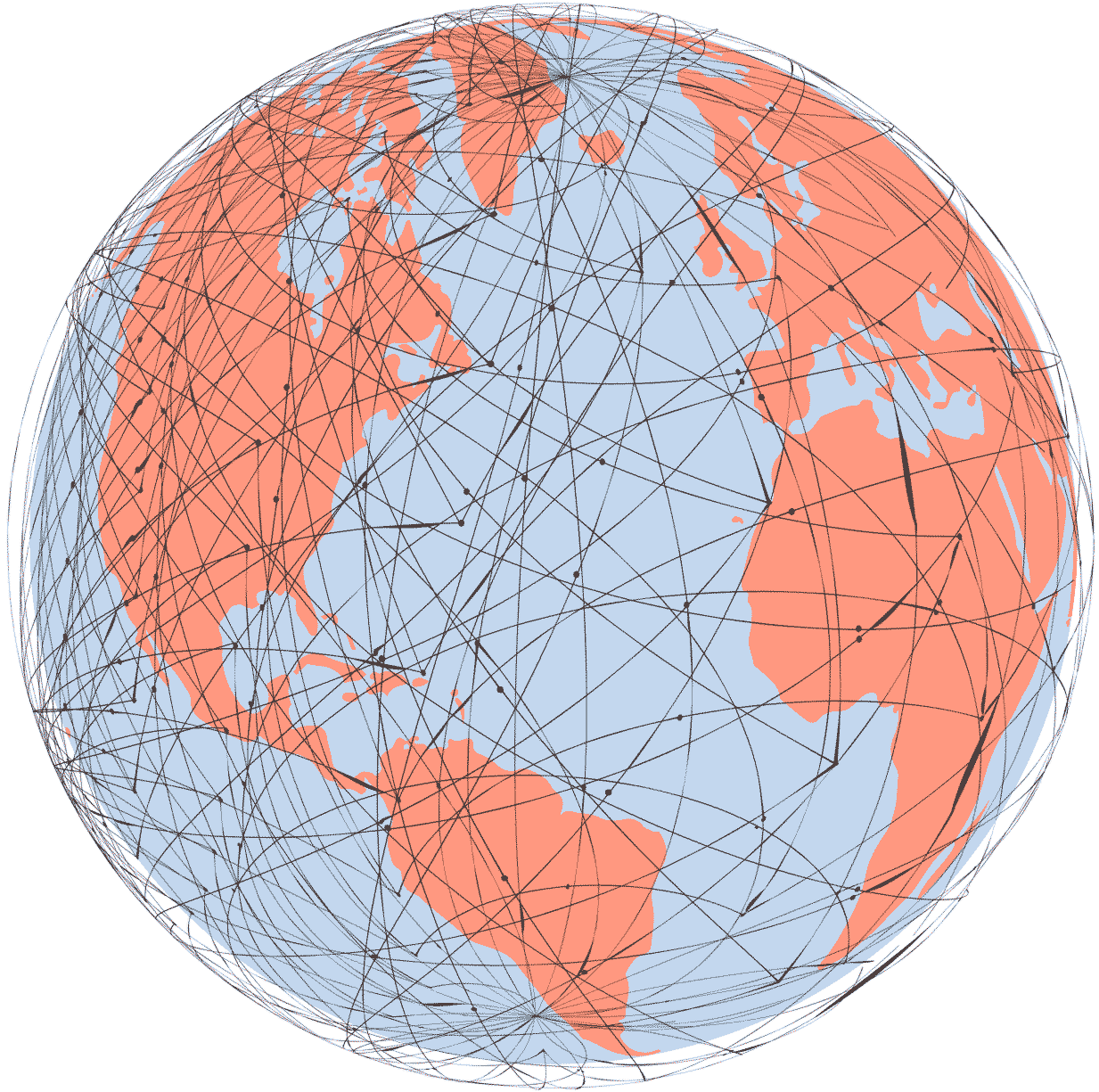
The Whole Earth project is a unique emergency response platform that facilitates a dialogue between designers, makers, and people working on the ground. Inspired by the independent production of face shields during the Covid-19 pandemic and the impact this had, the Whole Earth project deals with the analysis, consolidation, and creation of networks dedicated to the idea of Think Global, Make Local. It follows the approach of a decentralised production system, with ideas that are shared globally. The concept of open-source and the common creative licence allow blueprints of products to be shared freely as digital data via the internet and independently produced on-site following a demand. This gives rise to the possibility that not just one or a few actors, but a global process can emerge—with people from various backgrounds working on it. The Whole Earth project puts this approach into practice in the context of responding to humanitarian or ecological crises.
Why is it needed?
Working in the humanitarian sector - the refugee crisis in Greece, and an environmental and global network-driven project - Precious Plastic, proved to us that a community of enthusiastic people can efficiently provide good solutions - from products to processes.
Finding these solutions is not that simple and we believe that only a global network of innovators has the view range and collective experience to do so. The target group of the project are people and places who need support and this could be anyone or anywhere; crises can and do occur in any place. But the project is also for the creators who want to use their skills for the better. Every important idea is stored in a database as a global public good; over time, the platform can react quickly to crisis, and solutions can be built upon existing ideas. Freely available knowledge and blueprints enable local production, so crisis solutions can be manufactured regardless of location. Digital fabrication gives people the means to do it.
A global community-based approach is able to analyse situations through local actors and use a global network to find solutions. The result is a globally developed product as a solution to a local problem. Creation defines us as human beings, and the combination of this accumulated knowledge and skills in a global network, together with people trained in these areas, creates a tremendous power of democratised production. This enables independence through a common will to do good. It can even enable people to support themselves by initiating a design process and becoming a local actor. The project does not aim to create individual property, but to be a tool for humanity to help itself. There is great power in design, and perhaps open-source approaches can be the way to fully unleash it. A platform like this can be a new way of thinking, starting with crises and urgent needs and eventually providing answers to the problems in a broader area of our lives.
Process
The platform is the centre of the work. Solutions are developed and applied. The difference to traditional methods is that these solutions are stored in a database on the platform and can be reused for future problems. At the heart of this platform is a community that is responsible for finding new solutions together.

How could it look?
A platform is needed to enable communication and exchange between global/local actors. This could be both social media accounts and cloud storage solutions or a website that combines these different ns. A gathering point for interested parties, a platform for exchange, an exhibition of what has been created, a database for a global commons. A global network.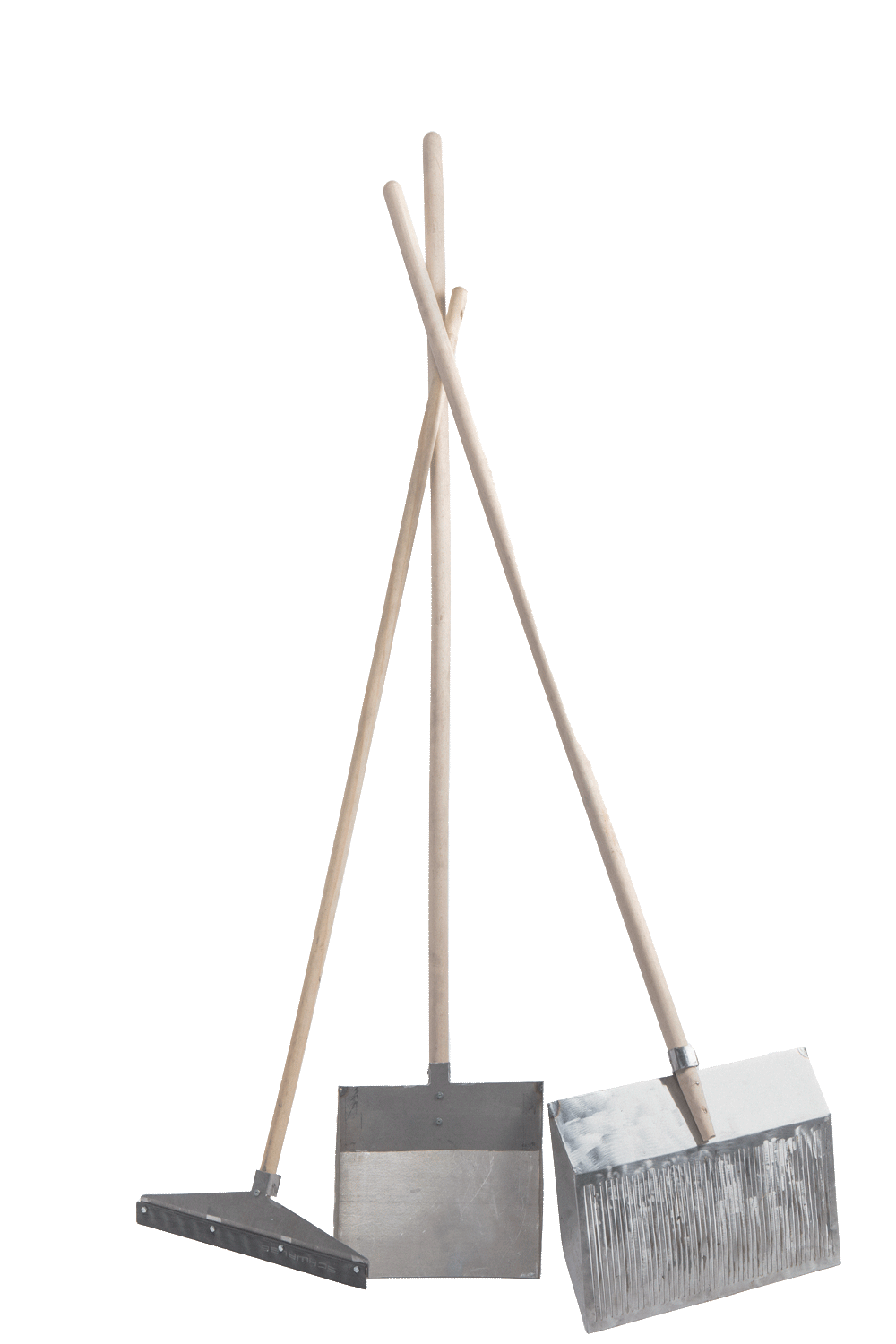
Ahr Candlestick
APRIL 2022
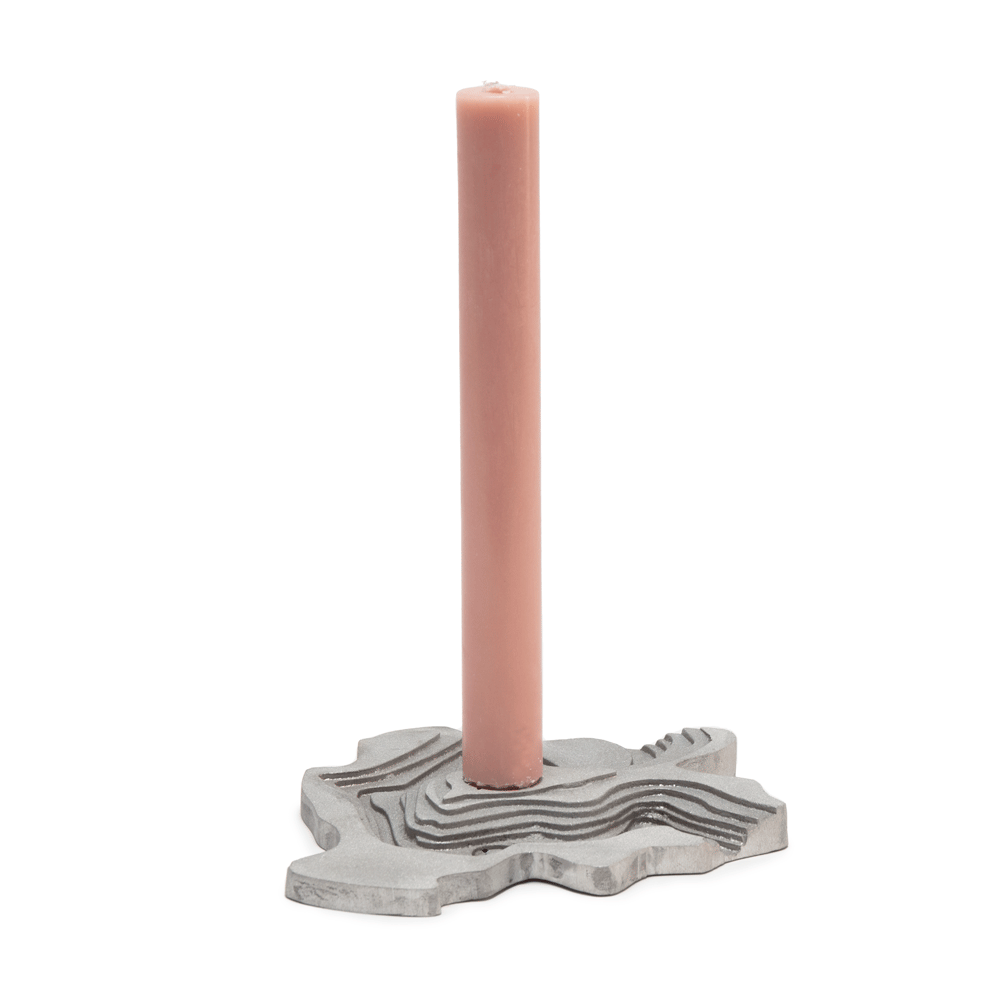
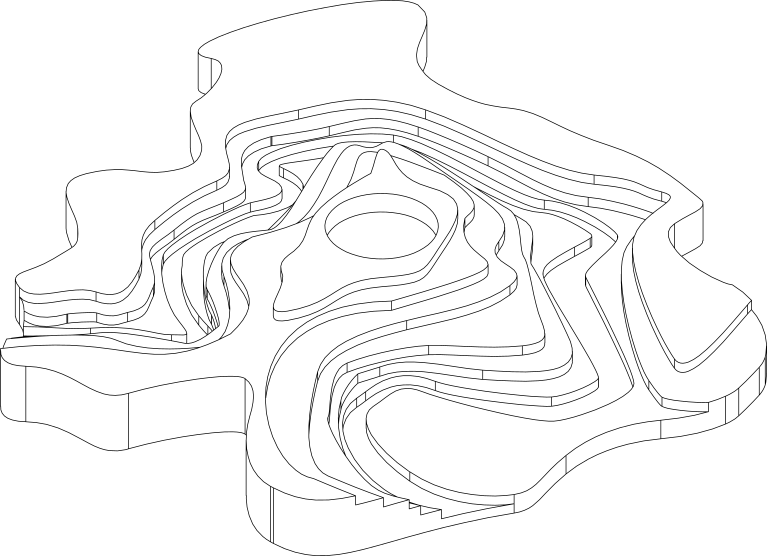
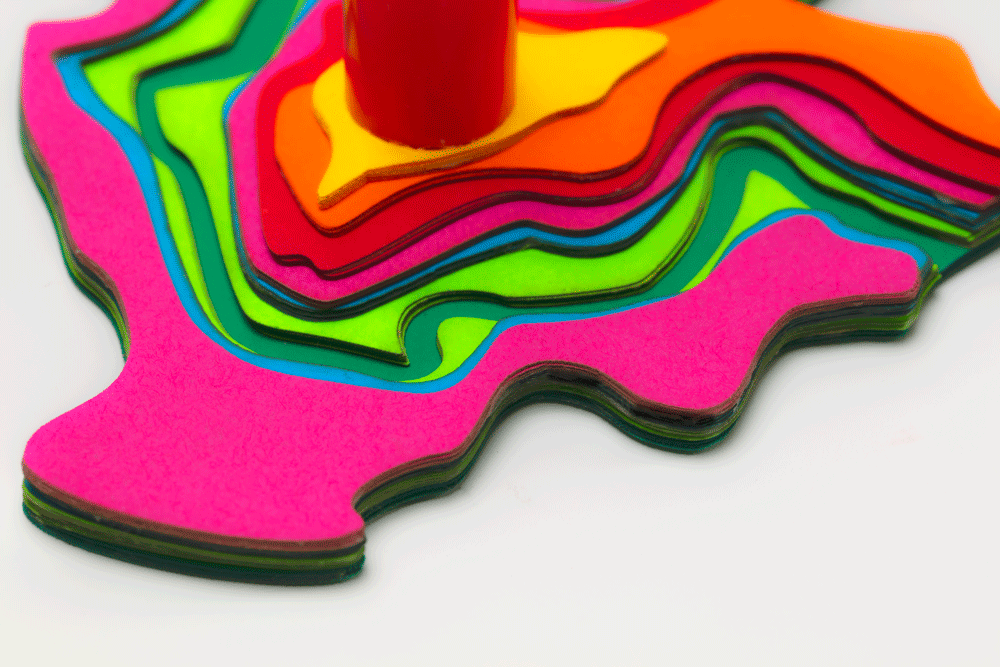
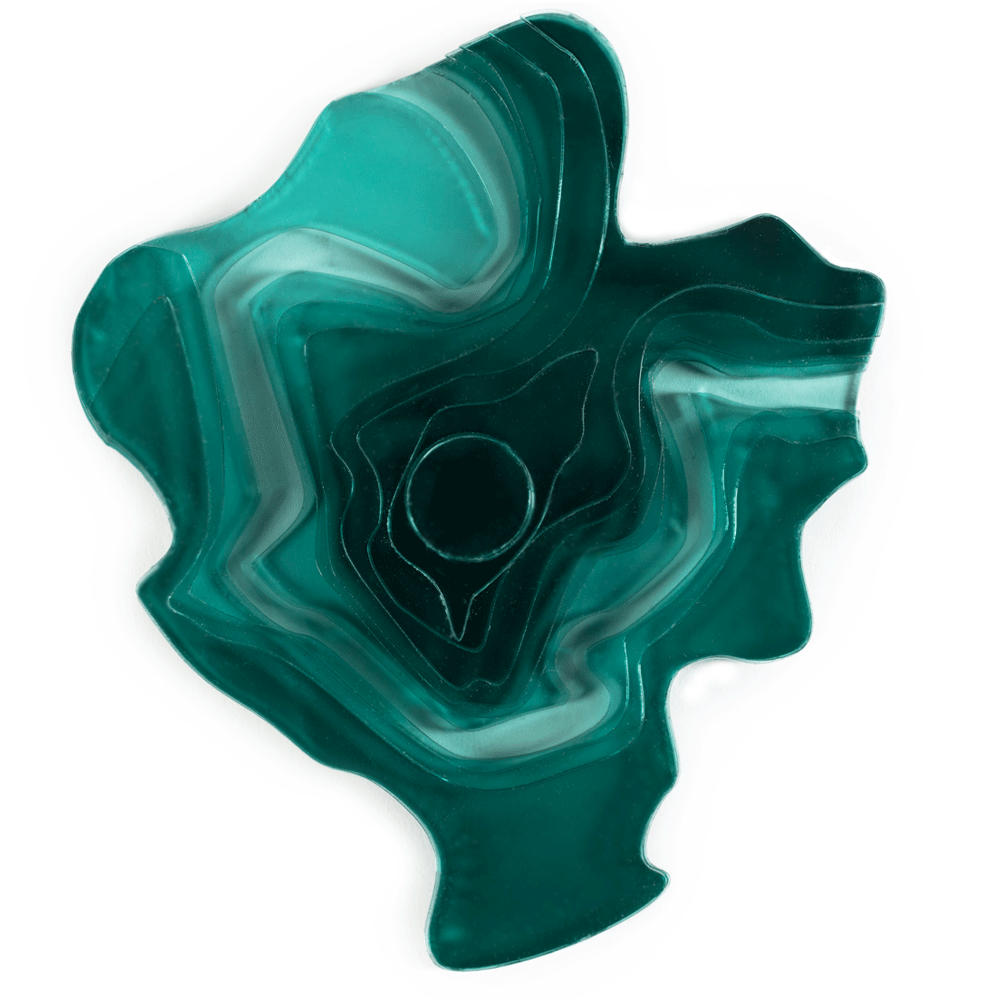
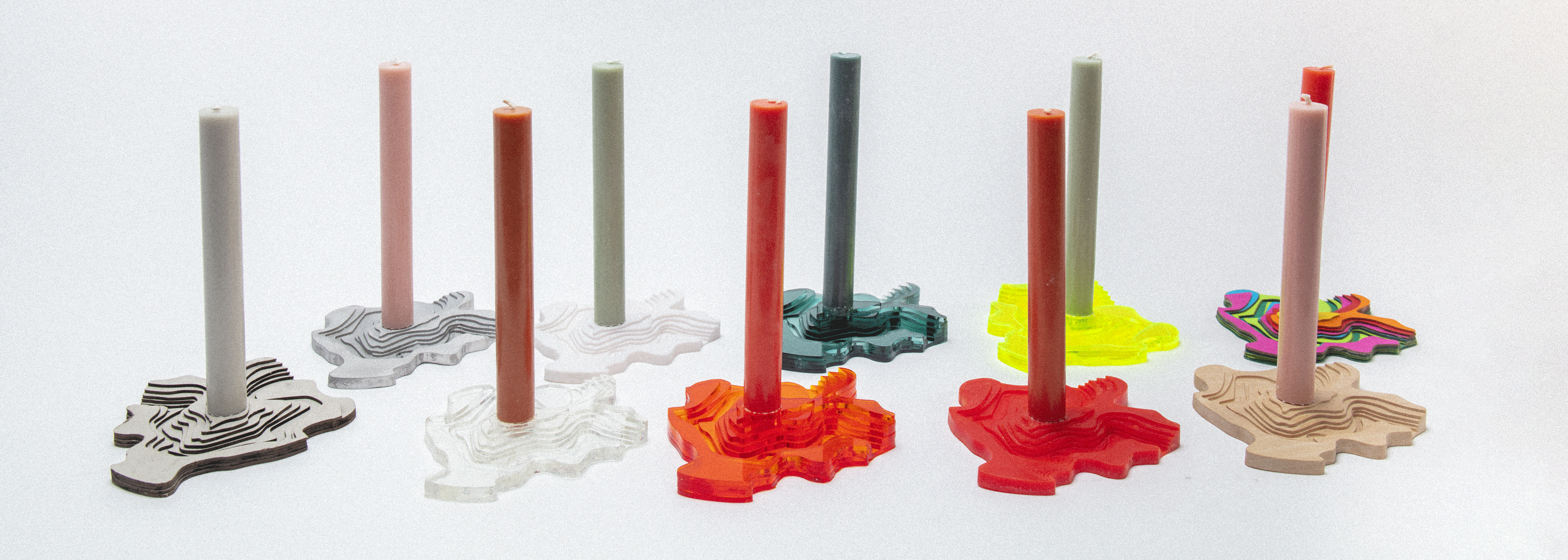
The Ahr Candleholder is a product that is part of the Whole Earth project. It works at a time when the worst crisis is over and other things to normalise the situation become important. At a certain point, situations like the one in the Ahr valley change and other needs develop. If we take a closer look at this situation, we learn that at this moment attention, trained craftsmen and money are needed, because the problem is farfrom being solved and affected people still cannot live in their houses. Trained craftsmen, as these houses need to be repaired. Money, as these craftsmen have to be paid. As a platform with design ambitions, we are not able to deliver these things directly, but we have alternatives. We are able to create a design and sell it with a licence. This way we generate money and cover two of the problems. To get attention, the design needs to be emotionally connected to the place and what is happening. My solution to this is a design of a topographical map, specifically a section of it - a very salient place for the flood. This section is modified by a minimal incision to a model of a candlestick. This can now be saved as a digital file. This is where the designer's work ends, which he donates as a charitable service. The key point of this product is that the digital file can be sold through the platform, indefinitely. The product is licensed under a Creative Commons donation-based licence, which means it can be reproduced, modified and marketed as long as the donation-based licence fee is paid. The client is free to choose how to convert this file into a product. In this case, it is designed for and adapts to digital fabrication techniques. Such a concept allows or encourages the client to become active himself. The topographic map was chosen because the Ahr valley is known for its nature and mountains. The chosen section represents this, with the river in the centre - the lifeline of the region, but at the same time also a great danger, which has been greatly neglected in terms of urban development. In the following, a wide variety of approaches are presented as to how this file could be transformed into a product.
Lowtech Shovel
APRIL 2022
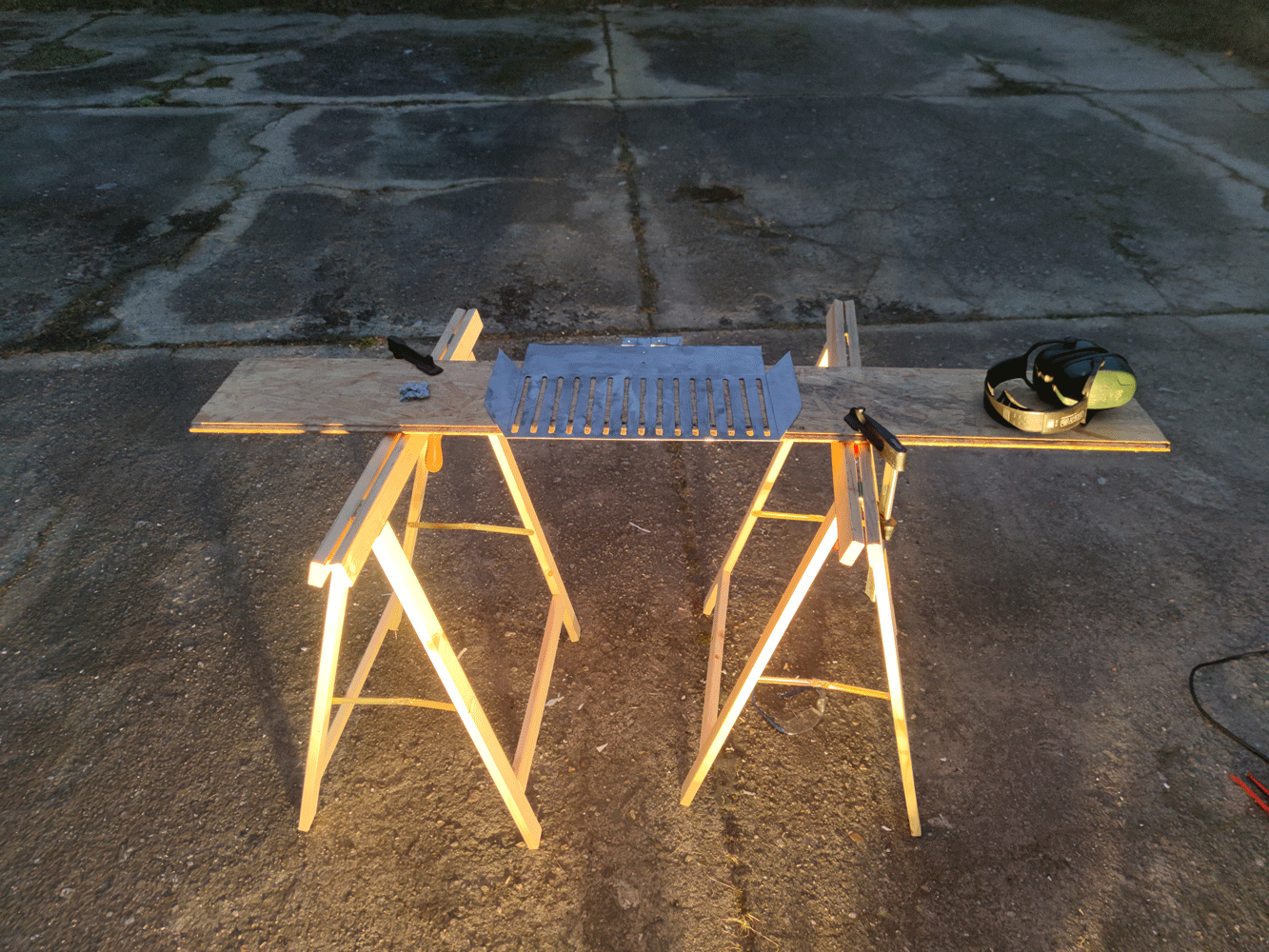
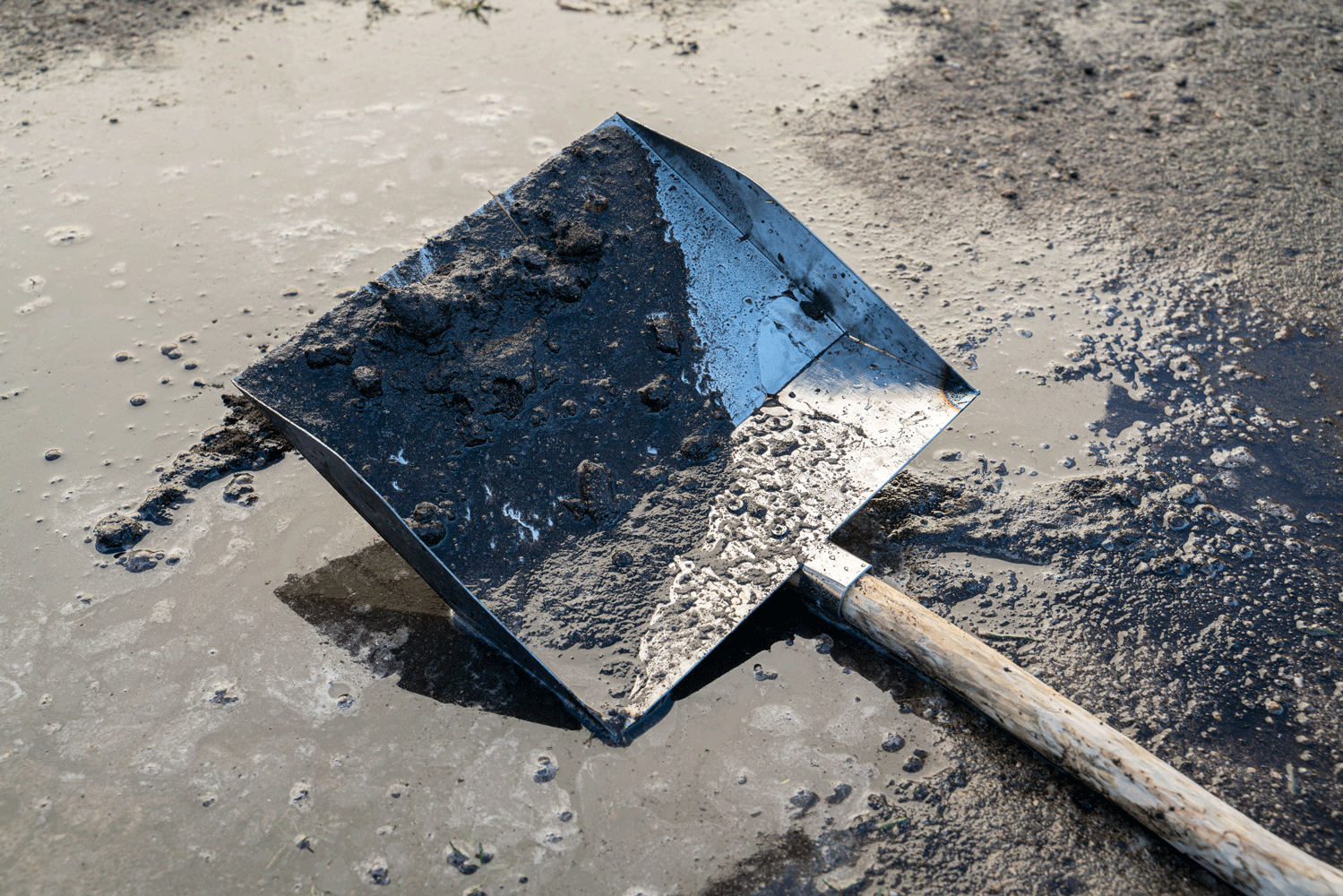
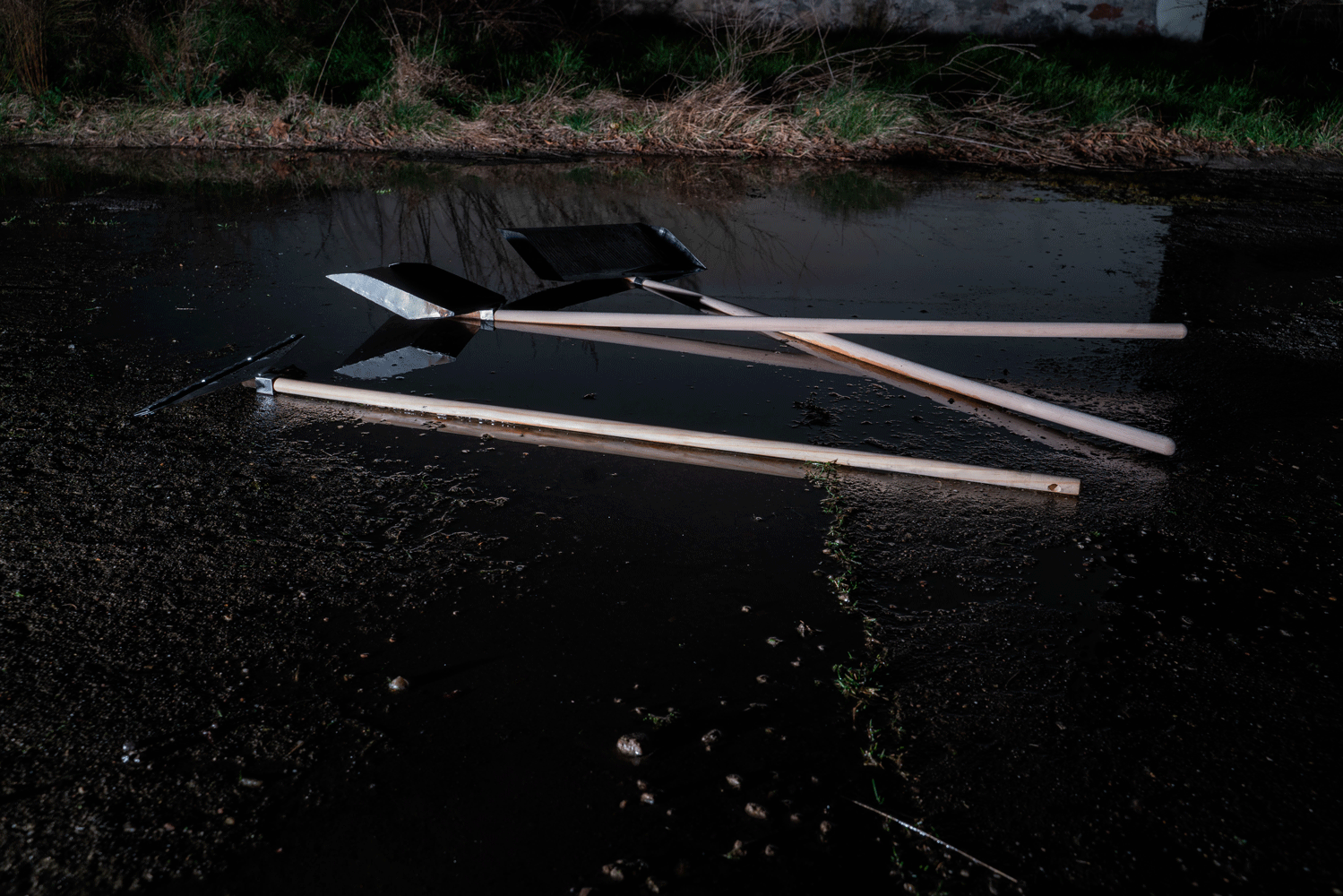
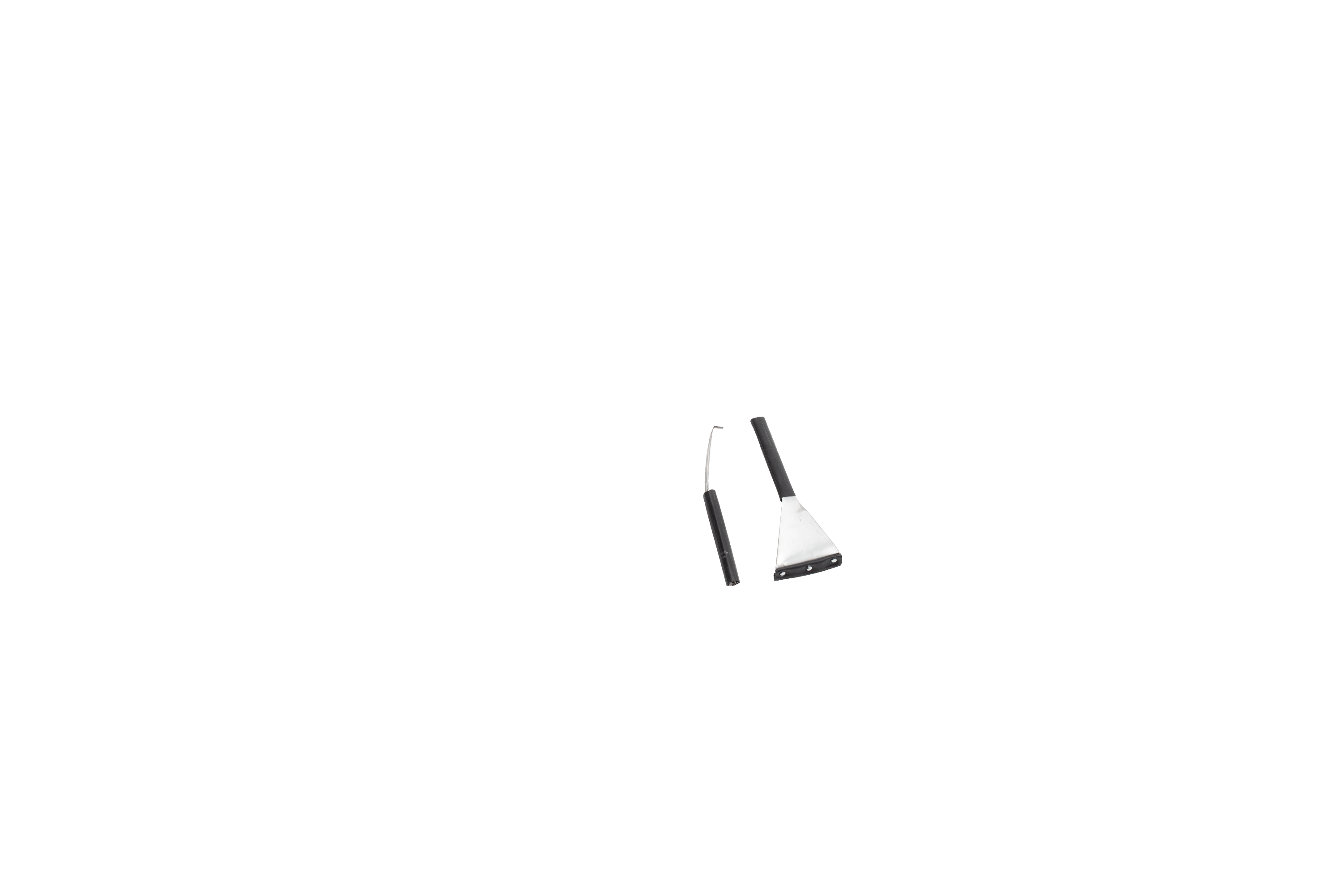
In crisis situations, solutions are needed quickly. The Covid-19 pandemic showed us that a maker approach can deliver them. As a result of the floods in the Ahr valley, thousands of people came to the region every day to help. Many of these people could not be adequately supplied with equipment, so tools such as shovels were missing. This work deals with how a network could quickly develop solutions for such a situation. The original problem, the lack of tools, is presented, to which the network can respond with a fast and iterative process. Through the various global actors, prototypes can be produced incredibly quickly in order to gather the knowledge learned from them. In the course of this process, different approaches emerge until the best products prevail. In this visualisation of such a process, the first prototypes of a very easy-to-manufacture shovel are created, while new approaches for situation-specific tools emerge along the way. The process has resulted in a shovel that can be made with the simplest of means, even from scrap metal produced on site. As well as other tools, such as a water scraper, a shovel designed to separate coarse mud and parts from the water, as well as small tools to remove mud from the living areas. Production in the field serves as another process for product development. Only through the experience gained in the field can a product become really good. A local actor is responsible for taking the developments and feedback back to the platform.
In this case, we are in Germany, a country with a large steel industry that is most likely able to supply such a situation with the necessary tools. However, several points speak for me why this tooling development nevertheless adds a lot of value to the situation. The design of a low-tech shovel creates an independence, a democratic product, so to speak, that is not bound to the goodness of an institution. In the case of Germany, this goodness was given, but in other countries it may very well be that the infrastructure for such donations is not given. Since the product flows into the platform's database, it can be used for crises in the longer term.
In the production of the Faceshields, a big motivation was an emotional one. One's own skills and tools could be used directly to help people in crisis. The same could be true in the production of the shovels. With the simplest of techniques, they could have been made on site from waste by volunteers.
Re.Works
Oktober 2021
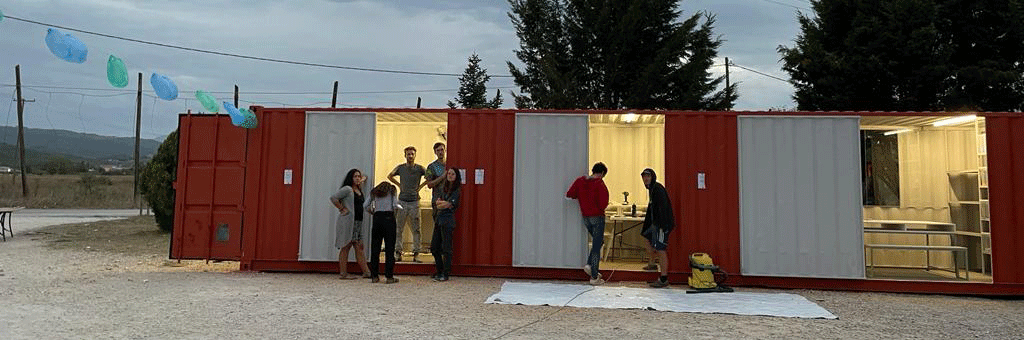
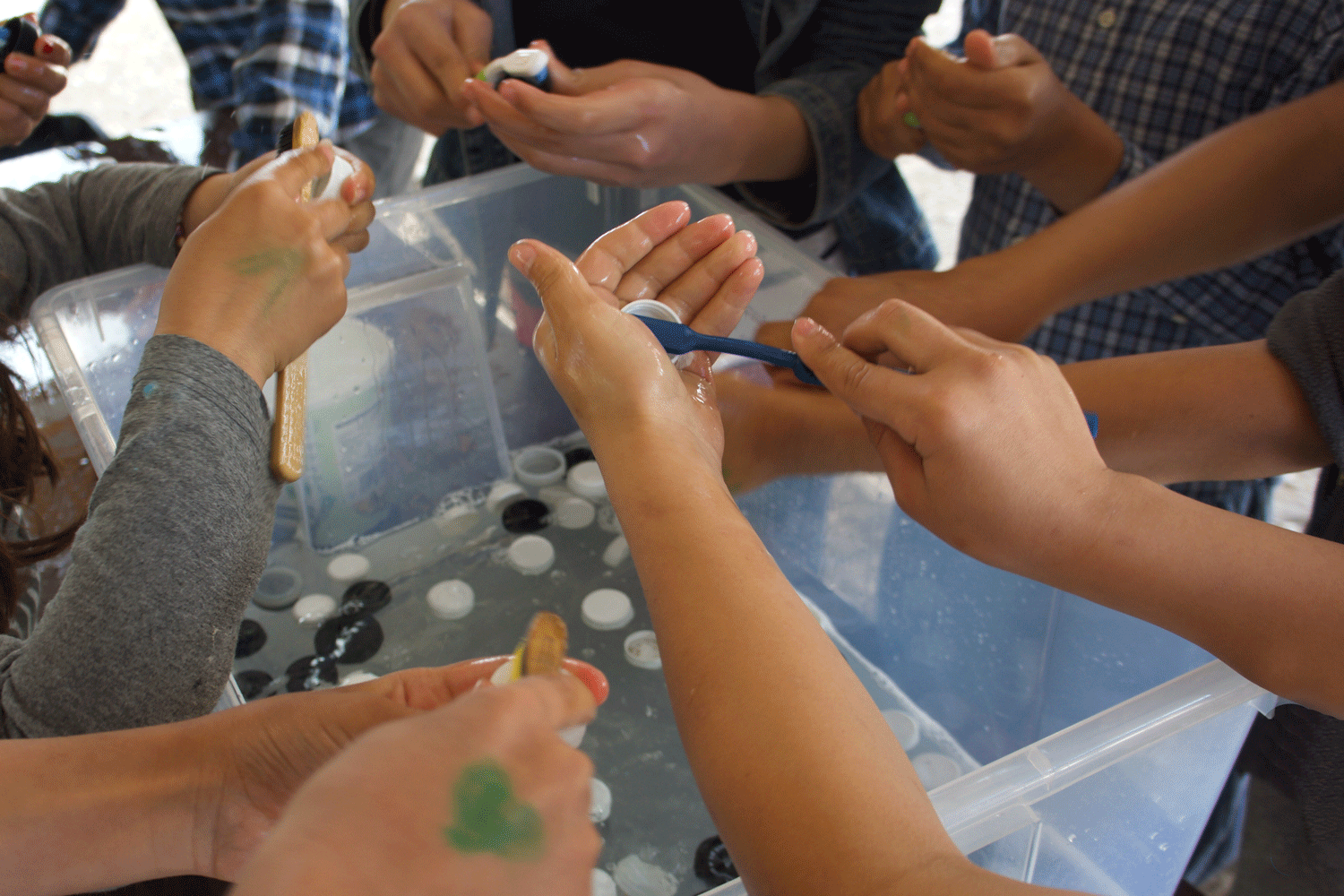
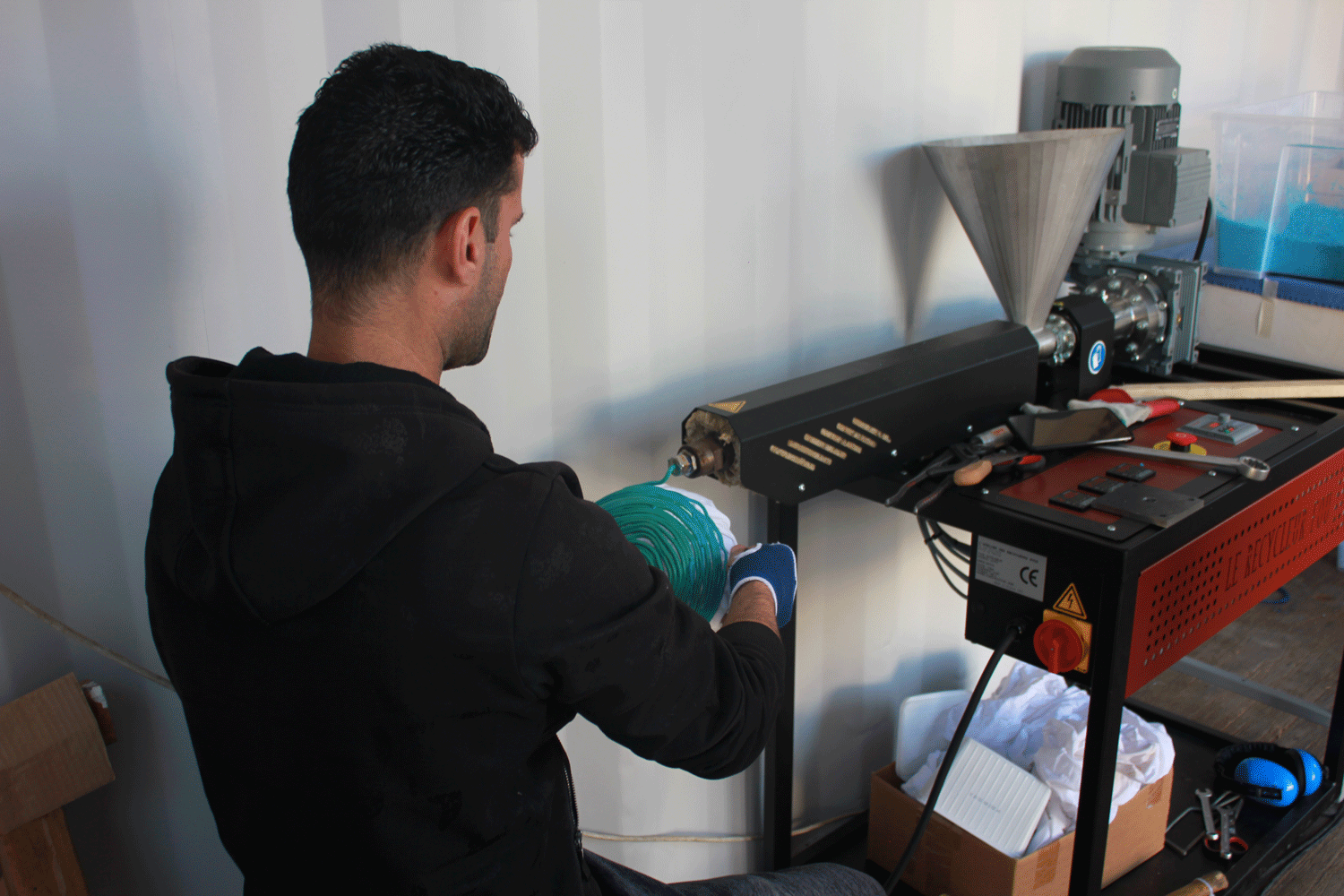
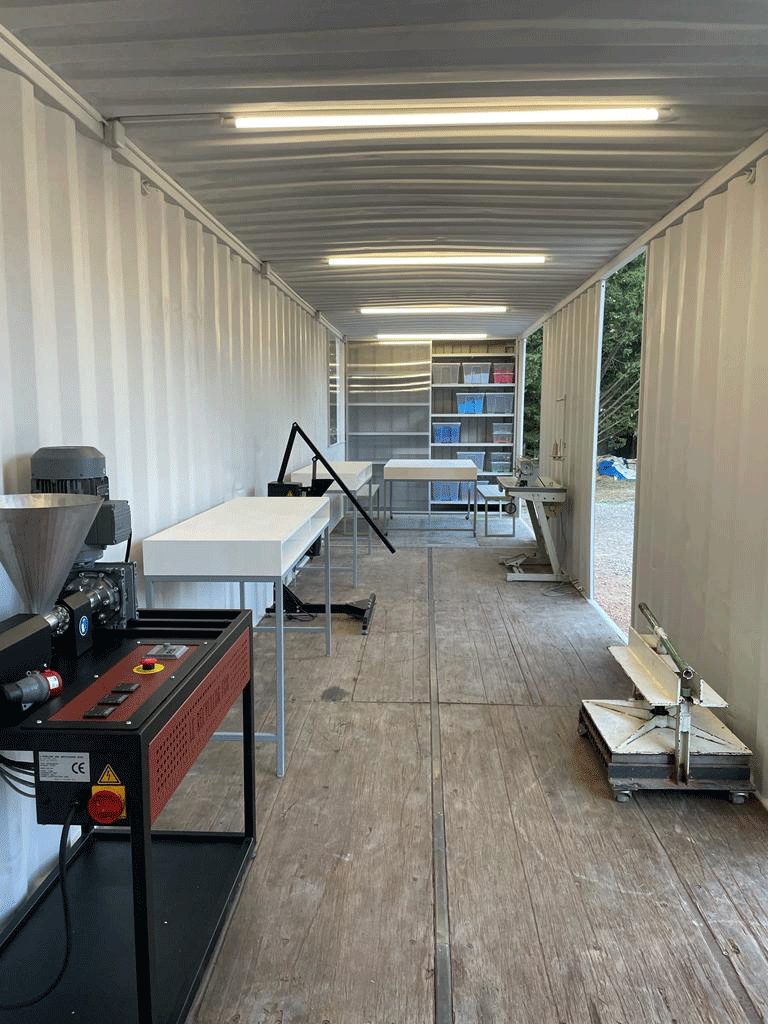
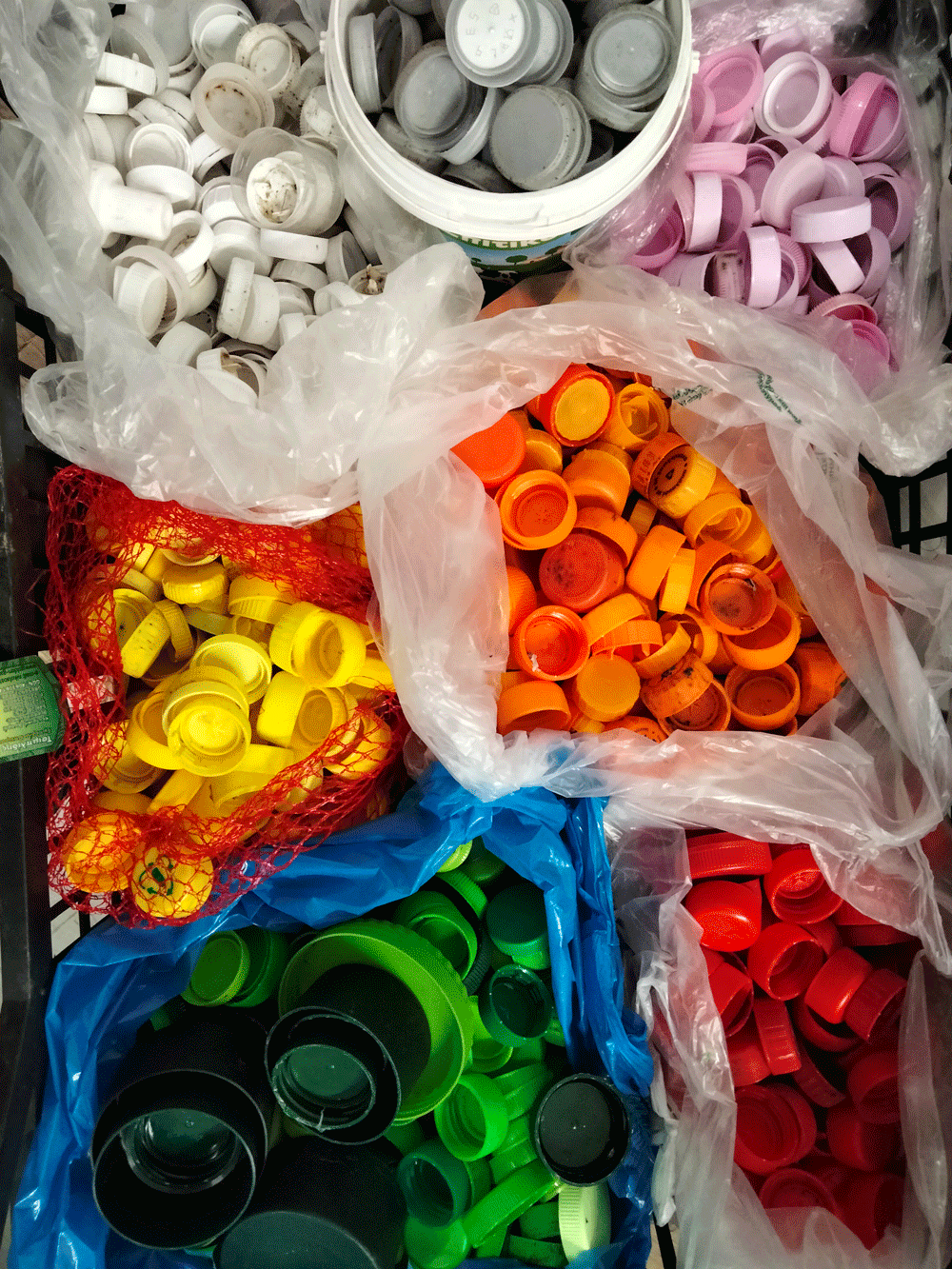
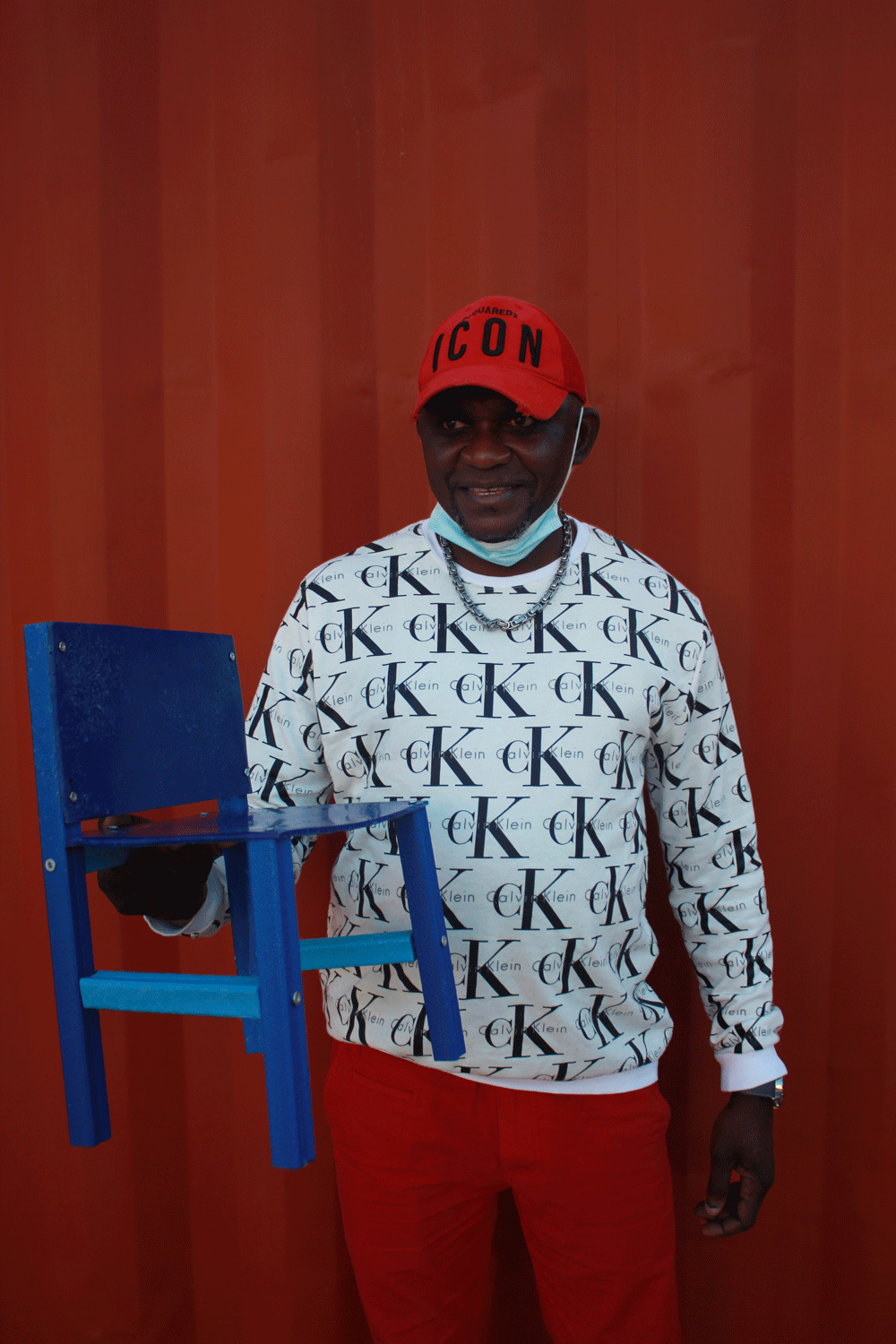
Re.Works is a sustainable plastic recycling workshop closely linked to the intercultural maker space Habibi.Works and based on the open-source movement Precious Plastic to promote plastic recycling. The workshop raises awareness among participants and cooperation partners about the dangers of plastic and viable alternatives through education and upcycling of plastic waste. In the workshop, which is largely self-directed by the target group, participants from the local Greek and refugee community transform plastic waste into much needed and beautiful products that bring joy.
We collaborate with the Habibi.Works project of Soup and Socks e. V. - an innovative approach to using the Makerspace model in a humanitarian context. We increase the integration channels between the asylum seeker community and the local Greek community in Katsikas by offering a common goal: to act for a better environment. Every recycling measure goes hand in hand with education on sustainable consumption patterns, the plastic footprint and alternative materials. In humanitarian and other crises, we usually face a trade-off between quick response and a low budget for the well-being of the environment. When we try to solve one problem, we make another worse. With the Re.works project, we want to have a positive impact on both humanitarian and environmental issues.